Taking your blood pressure is the only way to know if you have high blood pressure (also called hypertension). Nearly half of American adults have high blood pressure, and many don’t know it. Treating and managing high blood pressure is important.
Blood pressure readings include two numbers. The top number is the systolic pressure (the force of blood on the artery walls when your heart beats) and the bottom is the diastolic pressure (the force of blood on the artery walls while your heart’s resting between beats).
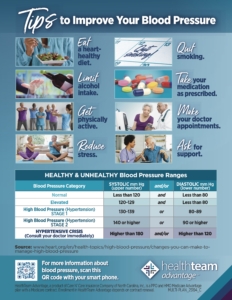
Healthy vs. Unhealthy Numbers
Here are important blood pressure numbers from the American Heart Association:
- Normal blood pressure is less than 120/less than 80
- Elevated blood pressure is 120-129/less than 80
- High blood pressure (hypertension stage 1) is 130-139/80-89
- High blood pressure (hypertension stage 2) is 140 or higher/90 or higher
- Hypertension crisis (consult your doctor immediately) is higher than 180/higher than 120.
Your doctor may have a different blood pressure target for you based on your age and personal health issues.
If your blood pressure is elevated and you aren’t proactively trying to control it, you’ll most likely develop high blood pressure over time.
If you have high blood pressure (hypertension stage 1 and 2), your doctor is most likely treating it with medications (or a combo of medications) and strongly encouraging lifestyle changes.
If your blood pressure is suddenly above 180/120, wait five minutes, test it again and if it’s still high, call your doctor immediately.
If your blood pressure is 180/120 and you’re having chest pain, shortness of breath, back pain, numbness/weakness, change in vision or speech, call 911 immediately.
Symptoms of High Blood Pressure
Despite what a lot of people think, high, even dangerously high blood pressure often causes no symptoms. It does increase your risk for heart attack, stroke, heart failure, kidney disease or failure, vision loss, sexual dysfunction, angina, or peripheral artery disease. The higher your blood pressure and the longer it stays that way untreated, the more your risk increases.
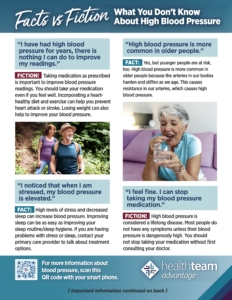
Fact vs. Fiction
People make a lot of assumptions about high blood pressure. Read our flyer, What You Don’t Know About High Blood Pressure, to separate fact from fiction.
8 Things You Can Do About High Blood Pressure
There are things you can do to improve your blood pressure. We’ve compiled some tips on a printable flyer to help you get started.